
“The body fascinates me endlessly.” interview with artist Katja Härkki
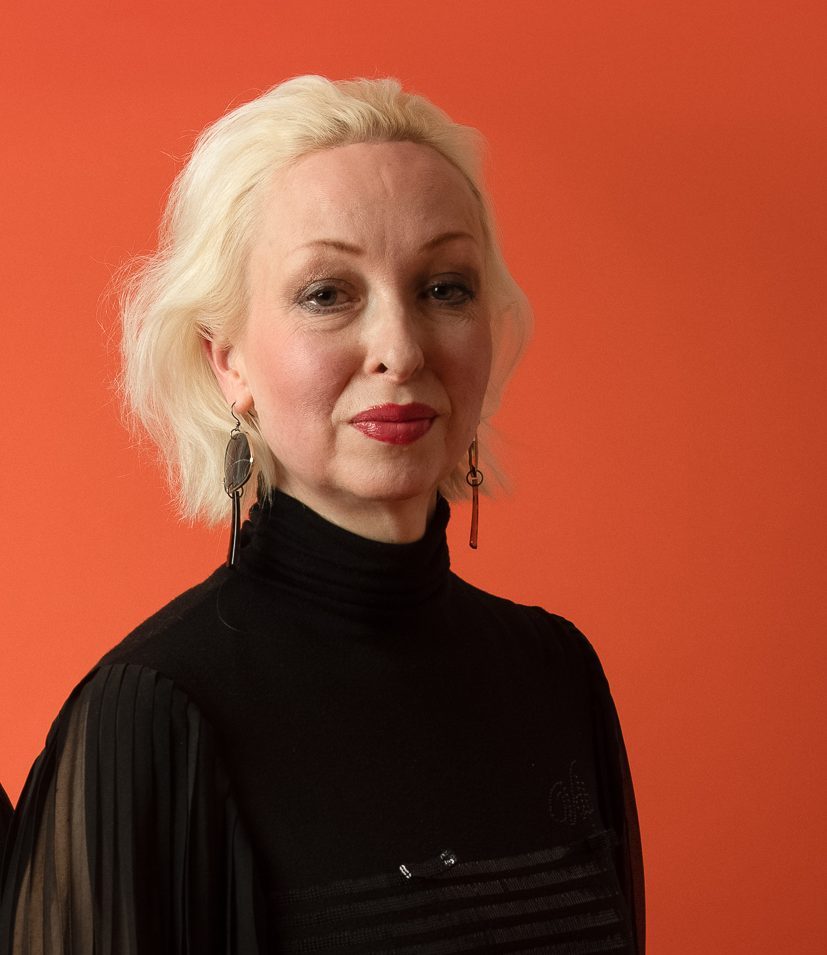
Katja Härkki photo: Aino Råman photography
Katja Härkki is a painter whose work sensitively explores the fragile connections between the body, relationships, and intense emotions. In her interview, she discusses how her versatile background informs her artistic practice and why establishing a connection with the viewer is essential. The interview is conducted by Laura Köönikkä.
Your paintings often explore the complexity of human emotions and the relationship between the body and the mind. What initially drew you to these themes in your artistic practice?
“A certain sentimentality in me is drawn to the mystery of being human. I am especially fascinated by those moments when something is beautiful precisely because it is on the verge of disappearing. Nothing in life is permanent. We are in constant transformation, where joy turns into sorrow, youth fades, and love can end in separation. Sometimes, of course, it happens the other way around — but most often it goes like this.”
“The dreamlike quality that recurs in my work grows out of this world. I often paint from memories and fleeting impressions, from spaces where time and place blend into one another. This emphasis on inner reality feels natural to me, and it echoes the decadent way of looking at the world from the inside out — not as it is, but as it feels. My paintings do not aim to depict reality, but rather the way the body and mind carry experiences, desires, and vulnerabilities within them.”
Many of your works seem to exist between dreamlike imagery and reality. How do memories, personal experiences, or imagination influence the scenes you create?
“When a painting is on its way, it appears to me as a visual vision: a posture, the direction of light, the sensation of a color on the skin. It is as if the subconscious were showing me a brief flash of something whose meaning I will only understand later, if at all. These visions are shaped by my experiences, my emotions, and the methods of constructing a painting that fascinate me. In my mind, I see a vivid image, a single posture or a constellation of them, that I want to connect with a particular technique, palette, atmosphere, or the interplay of several elements. The vision is never isolated; it is intertwined with quiet echoes of experiences and feelings the kind I have not consciously stored, yet that have remained alive in my inner landscape.
This is why my paintings often become dreamlike: they are built from the silent layers of the subconscious, which reveal themselves only through the process and uncover what my inner mind has already shaped.”
You originally studied fashion and costume design before focusing on painting. How has this background influenced your visual language or the way you approach the human figure in your art?
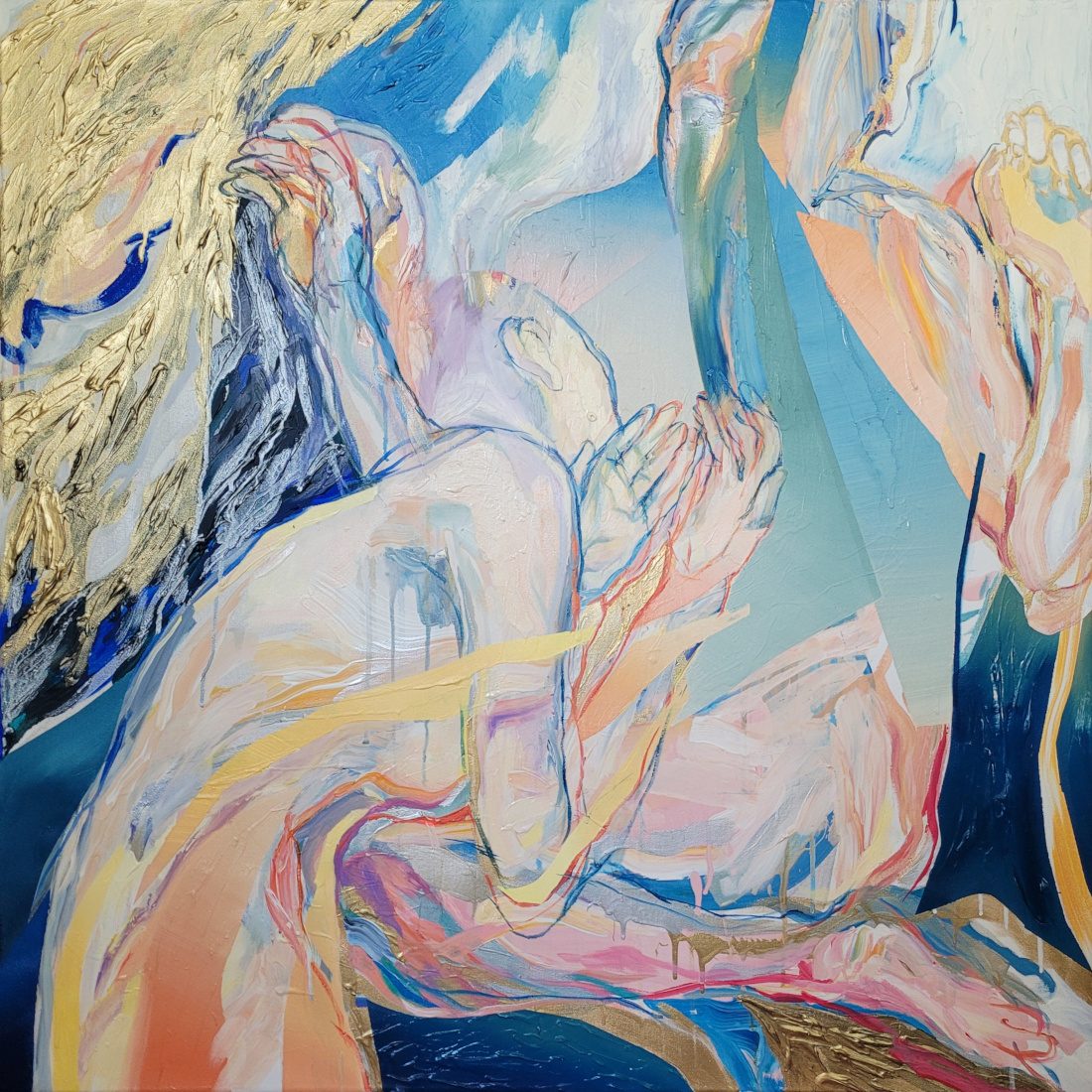
“My studies and early career in clothing and costume design have, of course, influenced the way I approach the human body in my art. In the early stages of my visual art practice, I painted abstract and nature-themed works, but over time, I began to feel that these themes were no longer enough to express everything I wanted to convey. In 2017, the human figure entered my paintings with force: erotic, corporeal, and intense presence. Through the body, I found a new kind of strength and depth in my expression.
The body fascinates me endlessly. Its spiritual dimension, but especially its physicality and the nuanced color world of the skin, are central to my work. Although my background is in clothing design, the bodies in my paintings are unclothed. Clothing would anchor the works to a specific time and place, and it would require focusing on the properties of fabrics, whereas what interests me most are the tones of the skin, their sensitivity, and the way they carry experiences.”
“Yet I find myself, as a visual artist, working with many of the same questions I faced as a clothing designer: how the body is constructed, how it exists in space, and how its presence and complexity can be portrayed. The body’s proportions, movement, and sense of presence are essential elements, and resolving them is part of the creation of every painting. My background gives me a precise eye for the structure of the body, while painting allows me to free it from reality and reveal its inner, experiential dimension.”
Nature and the human connection to the environment appear in many of your works. What role does nature play in shaping your ideas and creative process?
“I began creating visual art in 2009 with themes drawn from nature, and nature remains a strong element behind the bodies I paint. In my work, I explore the relationship between humans and nature, which is often wild, unpredictable, and primal. Nature also serves as a metaphor for the human subconscious and our inner, instinctive forces. It’s forms, especially in vegetation, fascinate me endlessly: they are diverse, shifting, and constantly evolving, much like the shapes of the human body.”
Your paintings invite viewers to reflect on their own feelings and experiences. What kind of dialogue or emotional response do you hope your audience will have when encountering your work?
“I hope my paintings create a dialogue between the viewer and the work: one that begins with a thought and continues into a feeling. When someone pauses in front of a piece, I hope they experience something that connects to their own life: a memory, a flash, an insight, or an emotion that opens a new perspective on what they have lived or who they are.
Often, a single artwork can bring a memory to the surface, prompting the viewer to see their own life anew. It can evoke a feeling that sets change in motion or opens space for something hidden. I’ve heard deeply powerful stories about how my works have touched people, sometimes in very unexpected ways. These experiences mean a great deal to me because they show that the artwork continues its life within the viewer in a way I cannot predetermine.
As an artist, I can never fully know what someone will find in my work, and that is precisely what makes the interaction so valuable. The viewer’s experience is not just an interpretation, it becomes part of the artwork’s life. It completes what I have begun and carries it in a direction I could not have imagined for myself. This is what makes encountering art so unique and important.”
Katja Härkki website: https://www.katjaharkki.com
Katja Härkki instagram: https://www.instagram.com/katjah.art/